How to Start a Bakery Business: A Practical Guide
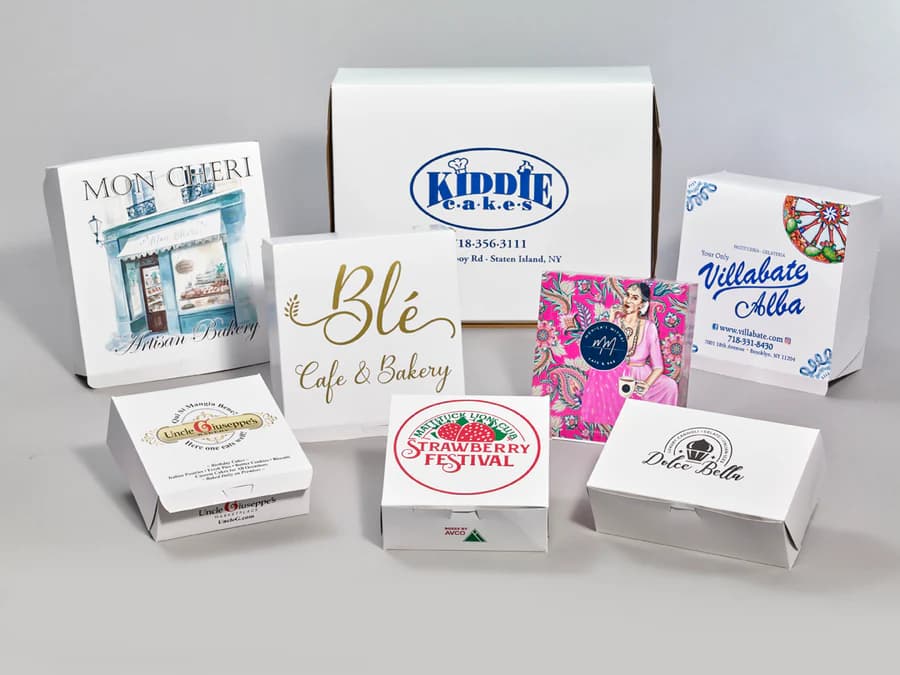
Published by Avco Boxes, a custom pizza and bakery box manufacturer in Long Island, New York since 1989.
To start a bakery, choose a model (home bakery, market stall, wholesale, storefront or cafe-bakery), check your state's cottage food law or commercial licensing rules, find a licensed kitchen if you need one, buy the right equipment, price each item from its real costs, then name and brand the business and set up packaging. Start small, test your products with real customers, and grow from there.
Choose your bakery model
The type of bakery you start decides your licensing path, your kitchen and how much you need to invest before your first sale.
| Model | How it works | Things to plan for |
|---|---|---|
| Home or micro bakery | Bake in your home kitchen and sell directly, where your state's cottage food law allows it | Product limits, labeling rules, sales caps or channel limits in some states |
| Farmers market stall | Sell weekly at one or more markets | Market fees, vendor permits, a tent and display, packaging that holds up outdoors |
| Wholesale | Supply cafes, restaurants or grocers on a regular schedule | A licensed commercial kitchen, consistent volume, delivery logistics |
| Storefront bakery | A retail counter with a production kitchen behind it | Lease, build-out, health permits, staff, long hours |
| Cafe-bakery | Bakery counter plus coffee and seating | Espresso equipment, cups and lids, more staff and a larger space |
Many bakers start at home or at a market to prove demand, then move into a shared commercial kitchen and later a storefront.
Understand cottage food laws
Cottage food laws let you make certain foods in a home kitchen and sell them without a full commercial license. Every state writes its own rules, and some cities and counties add their own. Depending on where you live, the rules can cover:
- Which foods are allowed. Some states allow only non-perishable items, such as breads, cookies and dry baked goods. Items that need refrigeration, like cheesecake, cream pies, custard fillings or cream cheese frosting, are often excluded.
- Where you can sell. Some states allow only direct sales to customers, such as in person or at markets, while others allow online orders or shipping within the state.
- Annual sales limits. Some states cap how much you can earn under the cottage food exemption.
- Labels. Many states require a label stating the product was made in a home kitchen not inspected by the health department, plus ingredients and allergens.
- Registration or training. Some states require a permit, a kitchen inspection or a food handler course.
Check your state's department of agriculture or health department website for the current cottage food rules, and ask your local health department about anything not covered. This is general guidance, not legal advice.
Get licensed
If your products or sales channels fall outside the cottage food law, or you open a storefront or sell wholesale, you will typically need a commercial setup. Requirements vary by state and city, but often include:
- Business registration, an EIN and a local business license
- A sales tax permit
- A food establishment or food processing permit from your health department or state agriculture department
- A food protection manager or food handler certification
- Zoning approval, fire inspection and a certificate of occupancy for a storefront
- Business insurance, including product liability
Call your local health department before you lease a space or buy equipment. They can tell you which permits apply and whether they need to review your plans first.
Set up your kitchen and equipment
If you are not baking at home, you have three main options: rent time in a shared commercial or commissary kitchen, sublet a restaurant kitchen during its off hours, or build out your own space. Shared kitchens let you test demand before taking on a lease.
A basic production list for most bakeries:
- Ovens. A convection oven for cookies and pastries; a deck oven if bread is central to your menu.
- Mixer. A stand mixer is fine at home; a floor mixer for larger batches.
- Refrigeration. Reach-in or walk-in for dairy, eggs, doughs and finished items that need it.
- Work surfaces and storage. Stainless tables, sheet pan racks and food-safe ingredient bins.
- Scales. Weigh ingredients for consistent results, and weigh finished items if you sell by weight.
- Smallwares. Sheet pans, cake pans, cooling racks, bench scrapers, piping tips and thermometers.
- Display case for a storefront, refrigerated if you sell cream-filled or fresh fruit items.
Keep food safety front and center
Baked goods with cream cheese frosting, whipped cream, custard or fresh fruit fillings must be refrigerated. Follow the 2-hour rule: perishable items should not sit at room temperature for more than 2 hours, or 1 hour above 90°F. Keep cold items at 41°F or below. Your health department may set specific holding rules for your bakery, especially at markets and events.
Price each item from its real costs
A common mistake is pricing by what feels right or matching the shop down the street. Instead, build a price from four parts for every item:
- Ingredients. Cost out the full recipe, then divide by the number of pieces it yields. Include small items like vanilla, sprinkles and parchment.
- Labor. Time to mix, shape, bake, cool, decorate and package, multiplied by the hourly wage you pay or want to pay yourself.
- Packaging. The box, bag, liner, label or sticker each item goes out in. A decorated cake in a box with a board costs more to package than a dozen cookies in a bag.
- Overhead. Rent, kitchen time, utilities, insurance, market fees and card processing, spread across the number of items you expect to sell.
Add those together for your true cost per item, then add the margin you need on top. Check the result against what customers in your area pay for similar items. If the number is too high, look at the recipe, batch size or packaging before cutting your labor to zero. Recalculate when ingredient prices change.
Plan your packaging
Packaging protects the product, keeps it fresh and carries your name out of the shop. Most bakeries need a few core items:
- Cake boxes. Sized to your cakes with room for decoration. Our cake box sizes guide shows which box fits which cake.
- Pastry and cookie boxes. For half dozens, dozens and mixed assortments.
- Cookie and pastry bags. Small bags for single cookies, muffins and grab-and-go items.
- Bread bags. Paper bags let crusty bread breathe. See our guide to paper bags for bread.
- Wax or deli paper. For handing over single items and lining boxes.
- Labels. Ingredients, allergens and any cottage food statement your state requires.
Our bakery packaging checklist walks through every item a counter needs and what to brand first. If you plan to ship, read how to ship cookies before your first order.
Name and brand your bakery
Choose a name that is easy to say and spell, fits what you bake, and is available as a business name, domain and social handle. Our bakery name ideas list 75 names and a process for checking them. For the visual side, bakery logo ideas covers ten logo concepts and how to make them print well on white and kraft.
Test, launch and grow
- Start with a short menu. A few items you make very well beat a long list made inconsistently.
- Test with real customers. Markets, pop-ups and pre-orders show you what sells before you invest in a storefront.
- Take pre-orders. They reduce waste and give you predictable production days.
- Track what sells. Drop slow items and build on the ones people come back for.
Packaging for your new bakery
When you are ready to put your name on the box, our custom bakery boxes come in 24 sizes, and custom cookie & bakery bags cover single items. You can see everything for bakeries in one place in our bakery and pastry shop collection. Orders include a free digital proof, a $75 one-time artwork setup and production in 7–10 business days after approval, all made in the USA.