Types of Pizza: 12 Styles and the Box Each One Needs
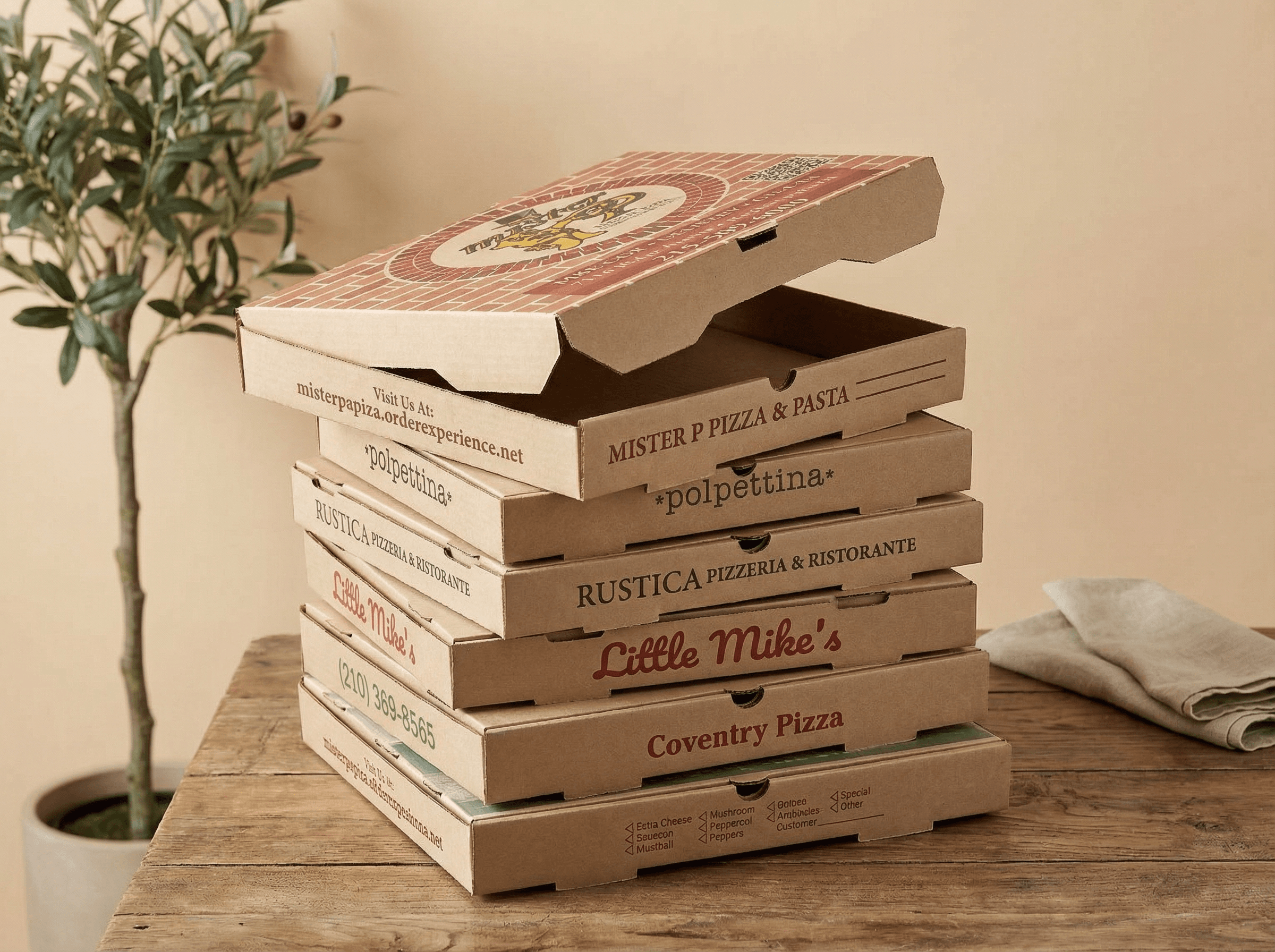
Published by Avco Boxes, a custom pizza and bakery box manufacturer in Long Island, New York since 1989.
The best-known types of pizza in the US include Neapolitan, New York, Chicago deep dish, Chicago tavern-style, Detroit, Sicilian, grandma, Roman al taglio, New Haven apizza, St. Louis, California and Greek-style. For packaging, they fall into three groups: thin round pies that go in a square box matching the pie's diameter, rectangular pan pizzas that need a rectangular or sheet box, and thick or deep pies where box depth matters as much as width. Below is a short description of each style and the box to look at for it.
Types of pizza at a glance
| Style | Shape | Typical size | Box to look at |
|---|---|---|---|
| Neapolitan | Round | Personal, around 10–12" | 10x10x2 or 12x12x2 |
| New York | Round, sold whole or by the slice | Large, often 18" | 16x16x2 to 20x20x2, plus slice boxes |
| Chicago deep dish | Round, tall | Varies by pan | Square box matching the pan; check depth |
| Chicago tavern-style | Round, square-cut | Medium to large | 12x12x2 to 16x16x2 |
| Detroit | Rectangular | Small and large pans | 12x17x2, or a square box for small pans |
| Sicilian | Rectangular, thick | Sheet pan or smaller | 18x26x2 or 12x17x2 |
| Grandma | Rectangular or square, thin | Sheet pan | 18x26x2 or 12x17x2 |
| Roman al taglio | Rectangular, sold in pieces | Cut to order | Slice boxes or 12x17x2 |
| New Haven apizza | Oblong or irregular | Medium to large | Size to the longest side |
| St. Louis | Round, square-cut | Medium to large | 12x12x2 to 16x16x2 |
| California | Round | Often personal | 9x9x2 to 12x12x2 |
| Greek-style | Round, pan-baked | Small and large pans | Square box matching the pan |
Round, thin and medium-crust styles
Neapolitan
The style from Naples: a soft, thin center, a puffy, blistered rim and a short bake in a very hot oven, usually wood-fired. Toppings are kept simple, with the Margherita (tomato, mozzarella, basil) as the classic. Pies are typically individual, around 10 to 12 inches. Box: a 10x10x2 or 12x12x2 from our personal pizza boxes or the 12-inch size. The soft center holds moisture, so it travels best over short distances.
New York
Large, thin pies with a crust that is crisp underneath but flexible enough to fold a slice in half. Whole pies are commonly 18 inches, cut into eight wide slices, and many shops sell by the slice at the counter. Box: an 18x18x2 for full pies, with 16x16x2 or 20x20x2 depending on your pie size, all in our large and party boxes. For counter sales, single slice boxes are made for this style.
Chicago tavern-style
Chicago's everyday pizza is not deep dish. Tavern-style has a thin, crisp, almost cracker-like crust with toppings out to the edge, and it is cut into small squares rather than wedges, often called a tavern cut or party cut. Box: a standard 2-inch-deep square box matched to the diameter, usually from our 12, 14 and 16 inch boxes.
St. Louis
Another cracker-thin, square-cut style, made with a crust that typically contains no yeast. Its signature is Provel, a processed cheese blend of cheddar, Swiss and provolone that melts smooth rather than stretchy. Box: the same as tavern-style, a square box matched to the diameter. A thin pie has no depth issues in a 2-inch box.
California
California-style pizza is defined more by its toppings than its crust: a thin crust with non-traditional, often seasonal toppings such as barbecue chicken, goat cheese, fresh greens or vegetables. Pies are often individual. Box: 9x9x2 to 12x12x2, depending on your size.
New Haven apizza
Connecticut's style, pronounced roughly "ah-BEETZ." It is baked very hot, traditionally in coal-fired ovens, giving a thin, chewy, heavily charred crust. Pies are often oblong or irregular rather than perfectly round. A plain "tomato pie" typically comes without mozzarella unless you ask for it, and the white clam pie is the style's best-known variety. Box: measure the longest side of a typical pie and size up from there; an irregular 16-inch pie may need an 18x18x2.
Pan and rectangular styles
Detroit
A rectangular pan pizza with a thick, airy crumb. Cheese, traditionally Wisconsin brick cheese, is spread right to the pan's edges, where it caramelizes into a crisp, lacy crust. Sauce often goes on top after the cheese, sometimes in stripes. Common pan sizes are around 8x10 and 10x14 inches. Box: the 12x17x2 rectangle fits larger pans; small pans fit a 10x10x2 or 12x12x2 square. Detroit pies are taller than thin-crust pies, so measure your tallest pie and check it against the box depth.
Sicilian
The American Sicilian is a thick, spongy, focaccia-like crust baked in an oiled rectangular pan and cut into squares. In Sicily, the related sfincione is typically topped with tomato, onion and breadcrumbs, with less cheese. Box: the 18x26x2 party sheet box for full sheet pans, or the 12x17x2 for smaller rectangular pans. Check your pan's measurements against the box dimensions before you order.
Grandma
Associated with Long Island, grandma pizza is thinner than Sicilian. The dough is pressed into an oiled sheet pan and usually given little or no second rise. It is typically topped with cheese and then dollops or stripes of tomato sauce, often with garlic and basil, and cut into squares. Box: the same rectangular boxes as Sicilian; a thinner grandma pie has more room to spare on depth.
Roman al taglio
"Al taglio" means "by the cut." It is baked in large rectangular pans from a wet, airy dough with a crisp base, then cut into pieces to order and often sold by weight, with a wide range of toppings. Rome also has a thin, crisp round pizza, but al taglio is the one most US shops borrow. Box: single slice boxes for individual pieces, and the 12x17x2 rectangle for larger orders.
Greek-style
Common across New England, Greek-style pizza is baked in shallow, well-oiled round pans. The crust is thick and chewy with a crisp, almost fried bottom, and the cheese is often a blend that can include cheddar. The name refers to the pizzerias that popularized it, not Greek toppings. Box: a square box matching the pan diameter. The oil is worth planning for, so pick a sturdy board.
Chicago deep dish
Baked in a deep, round pan with a tall crust wall. The layers are typically reversed: cheese goes directly on the dough, then fillings, then a chunky tomato sauce on top. It takes longer to bake than thin styles, and a whole pie is heavy. Box: a square box matching your pan diameter. We do not make a deep-dish-specific box. Most of our sizes are 2 inches deep and the 16.5x16.5x2.5 adds half an inch, so measure your tallest pie and check the box depth before ordering. For heavy pies, the thicker B flute board holds up better.
How to choose boxes for your menu
- Match shape first. Round pies go in square boxes sized to the diameter. Rectangular pies go in rectangular boxes, not squeezed into squares.
- Measure the real pie. Hand-stretched crusts run large. If a pie lands between sizes, size up so the crust does not touch the walls.
- Check depth for thick styles. Detroit, Sicilian and deep dish are where depth matters. Measure your tallest pie, including toppings.
- Cover your slice business. If you sell New York or Roman-style pieces at the counter, a slice box saves you from putting single pieces in full-size boxes.
Our pizza box size guide lists every size we print and which pie each one fits. Our corrugated range runs from 7x7x2 personal boxes to 24x24x2, plus the deeper 16.5x16.5x2.5 and two rectangles, 12x17x2 and the 18x26x2 party sheet.
Print your style on the box
If your shop is known for one style, say it on the lid. "Detroit-style" or "New Haven apizza" printed next to your logo tells customers what makes you different before they open the box. Our pizza box design guide covers layout and how to keep artwork readable on white or kraft board.
Ready to order? Custom pizza boxes start at $32.50 per bundle of 50, with a 5-bundle minimum and a $75 one-time artwork setup per order. You get a free digital proof first, and production takes 7–10 business days after you approve it. Every box is made in the USA.