How to Start a Food Truck Business: Step by Step
Published by Avco Boxes, a custom pizza and bakery box manufacturer in Long Island, New York since 1989.
To start a food truck, pick a concept with a short menu, decide between a truck, trailer or cart, line up a commissary kitchen if your city requires one, get your health permit, mobile vendor license and fire inspection, outfit the kitchen and POS, find where you are allowed to park and which events to work, then brand the truck and your packaging so customers remember you.
1. Choose a concept and a simple menu
A truck kitchen has a few feet of line space and one service window, so the menu has to fit the space. Aim for a handful of items that share ingredients, cook quickly and can be eaten standing up. One signature dish that people talk about does more for a new truck than a long list of options.
Before you commit, visit the spots and events where you hope to sell. Notice what is already there, what sells out and what is missing. If you need a starting point, our food truck ideas and names post includes 24 concepts and the packaging each one needs.
2. Write a business plan
Even a short plan helps. Cover your concept, target locations and events, menu with a cost for every item, startup budget by category, monthly operating costs (commissary rent, fuel, propane, insurance, ingredients, packaging, permits and payroll) and how many orders per service you need to break even. Lenders and some permit offices will ask for it. The U.S. Small Business Administration and local Small Business Development Centers offer free templates and advising.
3. Truck, trailer or cart?
| Option | Strengths | Trade-offs |
|---|---|---|
| Food truck | Self-contained, drives itself, the most visible option | Highest upfront cost, engine repairs take the kitchen off the road |
| Food trailer | More kitchen space for the money, tow vehicle can be used separately | Needs a tow vehicle, harder to park and maneuver |
| Cart or kiosk | Lowest cost, quick setup, fits sidewalks and events | Very limited menu and storage, more weather exposure |
You can buy new, buy used or have one built:
- Used. Lower cost, but have a mechanic inspect the vehicle and confirm the kitchen will pass inspection in your city. A unit approved in one city may need changes for another.
- New or custom build. Laid out for your menu and built to current code, with a warranty, but a higher price and a longer wait.
- Leasing or renting. A way to test the concept before buying.
Before you buy, ask your health department for its mobile unit requirements. Many review plans or inspect the vehicle before issuing a permit.
4. Find a commissary kitchen
Many cities require food trucks to operate from a licensed commissary: a commercial kitchen where you prep food, store supplies, fill fresh water, dump wastewater and grease, and clean the truck. Some health departments require a signed commissary agreement before they issue your permit. Commissaries usually charge a monthly fee or by the hour, and some include overnight parking. Ask other truck owners which ones they use.
5. Get your permits and licenses
Food truck rules vary widely by state, county and city, and you may need separate permits for every city you operate in. Check with each local health department and city licensing office. Typical requirements include:
- Business registration, an EIN and a sales tax permit
- A mobile food unit health permit, often after a plan review and vehicle inspection
- A mobile vendor or peddler license from the city
- A fire inspection, especially for propane systems and cooking equipment with hoods
- A food protection manager or food handler certification
- Vehicle registration and commercial auto insurance, plus general liability insurance
- Event or temporary food permits for festivals and markets
Parking rules matter as much as permits. Many cities limit where and for how long trucks can park, set distances from restaurants or schools, or run designated vending zones and permit lotteries. This is general guidance, not legal advice.
6. Outfit the kitchen
Your equipment follows your menu, but most trucks need:
- Cooking equipment such as a flat-top griddle, fryer, range or oven
- Refrigeration that holds cold food at 41°F or below, and hot holding at 135°F or above, in line with the FDA Food Code
- Hand-wash and multi-compartment sinks with fresh and wastewater tanks sized to local rules
- Ventilation hood and fire suppression system
- A generator or shore power hookup, plus propane tanks if you cook with gas
- Stainless prep surfaces, food storage and a food thermometer
Plan storage carefully. Packaging takes up a surprising amount of space, and running out of containers mid-service is as bad as running out of food.
7. Set up your POS
A mobile POS on a tablet or phone with a card reader handles most trucks. Look for one that works offline when your signal drops, prints or texts receipts, tracks sales by item and location, and supports online pre-orders for busy events. Bring a backup battery and a cash drawer.
8. Decide where to park and which events to work
- Regular spots. Office districts at lunch, breweries in the evening, apartment complexes and business parks that invite trucks.
- Events. Festivals, farmers markets, sports leagues and concerts. Ask about vendor fees, expected crowds and power before you sign on.
- Private catering. Weddings, corporate lunches and parties offer guaranteed sales and less waste.
- A consistent schedule. Post your weekly locations on social media and keep them predictable so regulars know where to find you.
9. Brand the truck and your packaging
Your truck is your billboard. A clear wrap with a name that reads from across a parking lot, a short menu board and a consistent logo help people find you again. Our food truck logo ideas covers designs that work on a wrap and on small packaging alike.
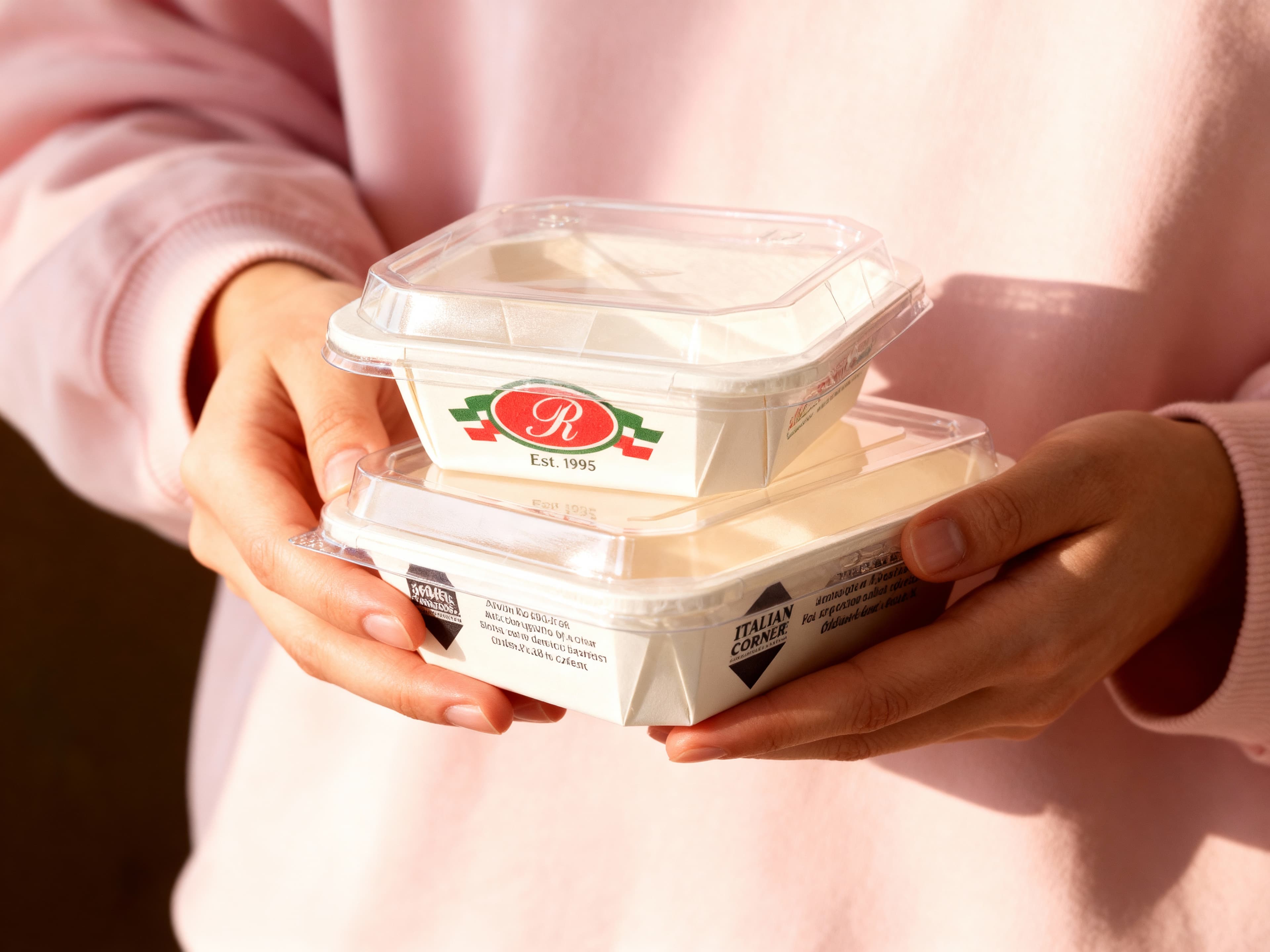
Packaging is the part of your brand that leaves with the customer. When someone walks back to the office with your bag, or posts a photo of your wrapped burger, your name goes with it. Our post on branded packaging for food trucks explains what to brand first when space and run sizes are tight.
10. Choose packaging that travels
Food truck customers often eat standing up, in a car or after a walk, so packaging has to hold food together and keep it at a good temperature.
- Wrap paper. For burgers, sandwiches, burritos and tacos. Easy to hold and quick to fold at the window.
- Paper bags. For carrying multi-item orders, fries and baked goods.
- To-go containers. For bowls, plates and anything saucy. Vented containers help fried foods stay crisp.
- Hero boxes. For long subs and cheesesteaks.
- Cups and lids. For drinks, soups and sauces.
Order enough for your busiest events, but check how much your truck can actually store before you place a large order.
Packaging for your food truck
We print the packaging trucks use most: custom food wrapping paper, custom paper bags and to-go containers. See everything for mobile vendors in our food truck packaging collection. Every order comes with a free digital proof and a $75 one-time artwork setup, production takes 7–10 business days after approval, and it is all made in the USA.