Eco-Friendly Food Packaging: A Practical Guide for Restaurants
Published by Avco Boxes, a custom pizza and bakery box manufacturer in Long Island, New York since 1989.
Eco-friendly food packaging for a restaurant mostly comes down to a few practical habits: use paper where it does the job as well as plastic, size packaging to the food so you are not shipping air, choose materials your customers can actually recycle locally, cut items nobody needs, and describe your packaging honestly. You do not have to overhaul everything at once. The steps below are the ones that tend to make a real difference without making service harder.
Start with what you actually use
Before changing anything, look at a week of orders. Which items do you go through fastest? Which ones end up in the trash still clean, like extra napkins, spare lids or a second bag around a single box? The packaging you use most is where small changes add up, and the packaging you throw away unused is the easiest place to save money and material at the same time.
Choose paper where it works
Paper handles a large share of everyday takeout well. Sandwiches, burgers and wraps travel fine in food paper. Most counter orders fit in a paper bag. Pizza already goes out in corrugated cardboard. Where paper does the job, it is usually an easy swap that customers notice and appreciate.
That said, be practical. Soups, saucy dishes and some cold drinks need containers and lids that seal well, and a container that leaks creates more waste than it saves. Pick the material that keeps the food safe and intact first, then look for the lighter or more widely recycled option among the ones that work.
| Item | Paper option | What to check |
|---|---|---|
| Sandwiches, burgers, wraps | Printed food paper | Grease resistance for hot, oily items |
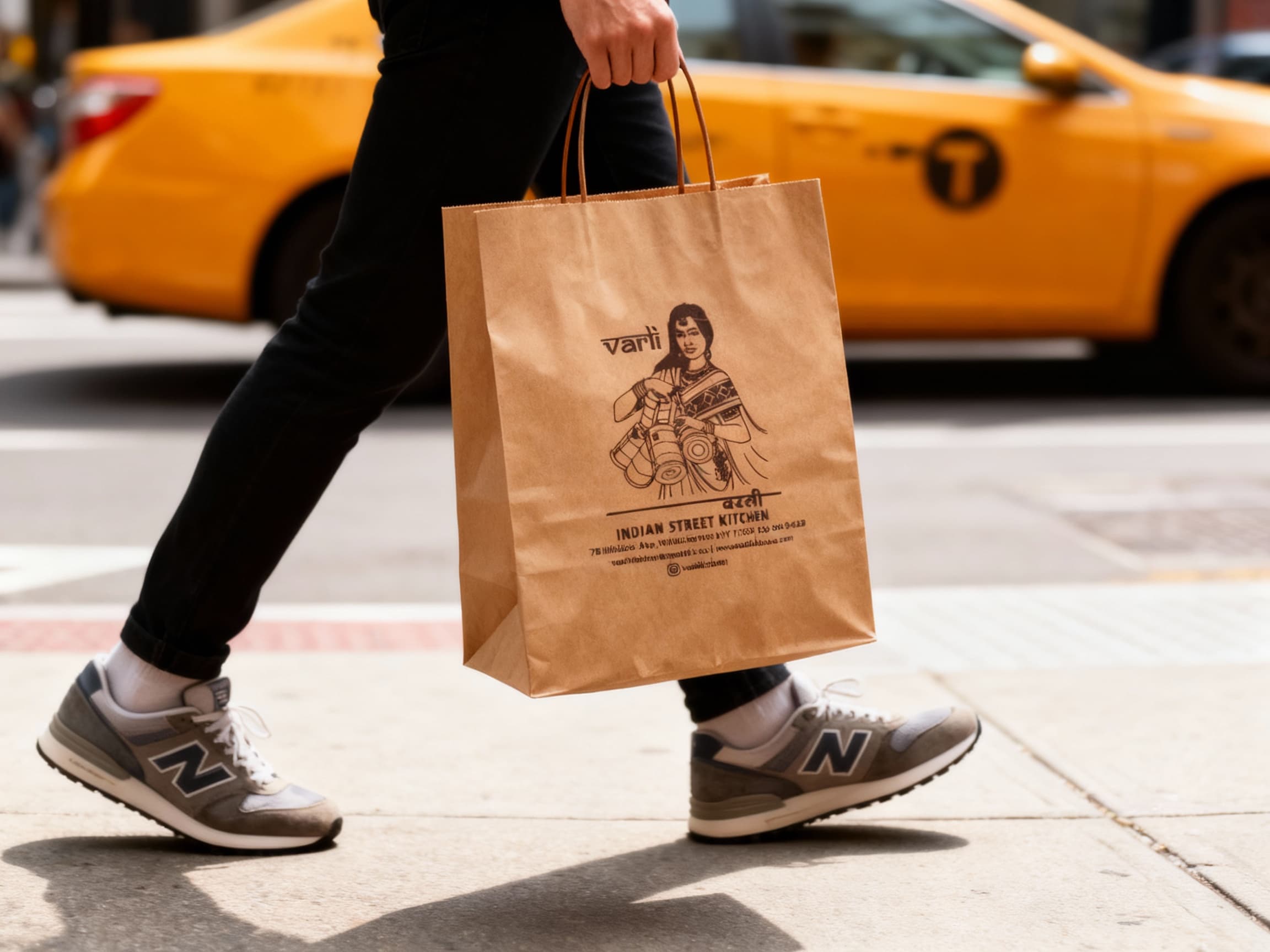
| Counter and takeout orders | Paper bags with or without handles | Bag strength for your heaviest order |
| Pizza | Corrugated pizza boxes | Box size matched to the pie |
| Cold drinks | Paper cold cups | Lid fit and what your area accepts for recycling |
For wraps and liners, our greaseproof paper guide and best paper for wrapping sandwiches explain which papers suit which foods.
Right-size your packaging
Oversized packaging is one of the most common sources of waste in takeout, and one of the easiest to fix.
- Match box sizes to your menu. A 12-inch pizza in a 16-inch box slides around and uses more board than it needs. Stock the sizes you actually sell.
- Keep a small and a large bag. One big bag for every order means a single coffee and muffin leave in a bag built for a family meal.
- Avoid double-bagging by default. A bag strong enough for your heaviest typical order removes the need for a second one.
- Size wrap sheets to the food. A sheet that covers the sandwich with enough left to fold is enough. Our sandwich wrap guide lists common sheet sizes.
If you are unsure how many of each size to stock, see how many pizza boxes to order for a simple way to plan from your sales.
Kraft and unbleached looks
Many restaurants choose kraft, the natural brown paper and board, because it looks earthy and understated, and it suits rustic, artisan and casual brands. If you like that look, kraft food paper, bags and pizza boxes make it consistent across your packaging. Our guide to what kraft paper is covers how it differs from white paper.
One caution: a brown color is a design choice, not an environmental claim. Choose kraft because it fits your brand, and avoid suggesting it is greener than white unless you can explain why.
Recyclable corrugated and biodegradable paper
Corrugated pizza boxes
Corrugated cardboard is widely accepted in recycling programs, which makes pizza boxes a good starting point. The catch is grease and leftover food, which programs handle differently. Our guide on whether pizza boxes are recyclable explains what customers can do, and how a short note on the box can help.
Biodegradable wax paper
If you want a paper option with an end-of-life benefit, our biodegradable wax paper is printed with your design like our other food papers. When you mention it to customers, call it what it is: biodegradable paper. Do not describe it as compostable or certified unless you hold documentation that says so.
Cut waste you do not need
- Use liners only where they help. A liner or sheet under food earns its place when it protects the box or improves the meal. If it does neither for a given item, leave it out.
- Stock lids that match your cups. A lid that does not fit gets thrown away, or worse, leaks. Buy cups and lids as a matched set.
- Offer napkins, utensils and condiments on request. Ask at the counter and add a checkbox to online orders.
- Order in realistic quantities. Packaging that sits for a year, or gets replaced after a menu or logo change, is waste too.
Talk about it honestly
Customers are quick to spot vague green language, and broad claims can cause real problems. The FTC's Green Guides, which describe how environmental marketing claims should be made in the US, generally advise that claims be specific, accurate and backed up. In practice that means:
- Be specific. "Our bags are paper" says more than "eco-friendly packaging".
- Say which part you mean. If the box is recyclable but the liner is not, say so.
- Point to local rules. Recycling access varies, so "recycle where accepted" is more accurate than a blanket promise.
- Claim only what you can show. Do not mention certifications, percentages or test results you cannot document.
An honest, modest message builds more trust than a big claim a customer can pick apart.
Putting it together
A sensible first round for most restaurants is right-sized pizza boxes or takeout containers, paper bags such as paper handle bags, food paper for wraps and liners, and paper cold cups if they suit your drinks. Everything we print is made in the USA, with a $75 one-time setup and a free digital proof before production.
Ready to make the switch? Browse our custom food paper, custom paper bags and custom pizza boxes.