Coffee Shop Menu Ideas: Drinks, Food and How to Price Them
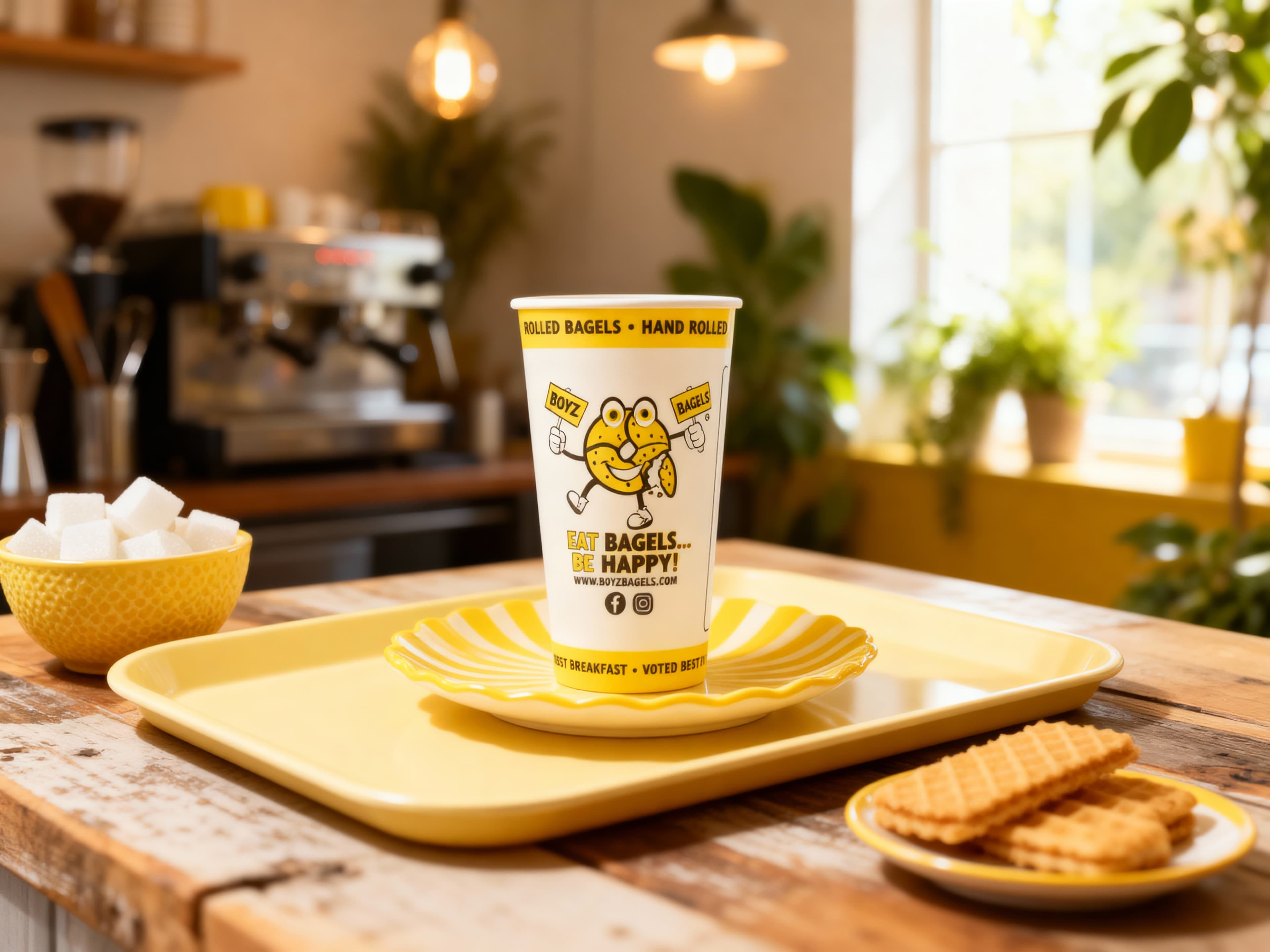
Published by Avco Boxes, a custom pizza and bakery box manufacturer in Long Island, New York since 1989.
A good coffee shop menu starts with a core espresso list (espresso, Americano, cappuccino, latte, flat white, cortado, macchiato and mocha), adds drip coffee and cold brew, a few iced drinks, tea, chai and matcha, and some non-coffee options. Round it out with two or three signature drinks, simple pastries and breakfast items, and a short list of add-ons.
The core espresso menu
These eight drinks are what most customers expect. They all use espresso and milk, so they add little extra stock.
- Espresso. A single or double shot, served on its own. Every other drink on this list is built on it.
- Americano. Espresso topped with hot water, for customers who want something close to drip coffee with an espresso flavor.
- Cappuccino. Espresso with steamed milk and a thick layer of foam. Smaller and stronger-tasting than a latte.
- Latte. Espresso with plenty of steamed milk and a thin layer of foam. The most common base for flavored drinks.
- Flat white. Espresso with a smaller amount of finely textured milk and very little foam, so the coffee flavor comes through.
- Cortado. Espresso cut with roughly an equal amount of warm milk. Short, smooth and popular with regulars.
- Macchiato. Espresso "marked" with a small spoonful of milk foam. Note that some customers will expect a layered caramel drink when they hear the word, so a one-line description on the board helps.
- Mocha. A latte with chocolate sauce, often finished with whipped cream. A bridge for people who do not love the taste of straight coffee.
Drip coffee and cold brew
Drip, or batch brew, is the fastest drink you serve and often the one regulars order every morning. Offer a house blend and, if you have the volume, a dark roast or rotating single origin. Pour-over suits a slower specialty shop but takes barista time.
Cold brew is coffee steeped in cold water for many hours, then strained. It is made ahead in batches, so it is quick to serve. Keep it refrigerated and follow your local health department's guidance on holding times.
Iced drinks
Almost every espresso drink can be served over ice. The most-ordered iced options are usually an iced latte, iced Americano, iced mocha and cold brew. Add an iced chai and an iced matcha and you have a full cold menu without new ingredients. Iced drinks need larger cups to make room for ice, and a clear cup shows off the layers.
Tea, chai and matcha
- Hot tea. A short list covers most requests: a black tea, an Earl Grey, a green tea, a peppermint and a chamomile or other caffeine-free herbal.
- Chai latte. Spiced tea concentrate with steamed milk. A dirty chai adds a shot of espresso.
- Matcha latte. Powdered green tea whisked into milk, hot or iced.
- London Fog. Earl Grey with steamed milk and vanilla, an easy win if you already stock both.
Non-coffee drinks
A few options for kids and anyone skipping caffeine:
- Hot chocolate, made with the same chocolate sauce as your mocha
- Steamers: steamed milk with a flavored syrup, such as vanilla or cinnamon
- Lemonade, plain or with a fruit syrup, for warm months
- Smoothies, if you have a blender and space for frozen fruit
20 signature and seasonal drink ideas
Signature drinks give people a reason to pick your shop. Most of these are a standard latte or cold brew with a syrup, spice or garnish.
- Honey Oat Latte: espresso, oat milk and a spoon of honey, with a pinch of cinnamon.
- Brown Butter Cold Brew: cold brew with a brown butter syrup and a splash of cream.
- Maple Pecan Latte: maple syrup and toasted pecan flavor, a fall regular.
- Orange Cardamom Cortado: a cortado with a touch of orange zest syrup and cardamom.
- Lavender Honey Latte: floral and lightly sweet, served hot or iced.
- Salted Caramel Cold Foam Brew: cold brew topped with a sweet, salty caramel cold foam.
- Morning Bun Latte: cinnamon, brown sugar and vanilla, like a pastry in a cup.
- Coconut Mocha: a mocha made with coconut milk and topped with toasted coconut.
- Spiced Pumpkin Chai: chai with pumpkin and warm spices for autumn.
- Peppermint Bark Mocha: dark chocolate, peppermint and white chocolate shavings for winter.
- Strawberry Matcha: iced matcha layered over strawberry milk, a striking drink in a clear cup.
- Espresso Tonic: a shot poured over tonic water and ice with a citrus slice.
- Cinnamon Roll Cold Brew: cold brew with cinnamon syrup and vanilla sweet cream.
- Rose Pistachio Latte: pistachio flavor with a hint of rose, finished with crushed pistachios.
- Mexican Spiced Mocha: chocolate, cinnamon and a little chili warmth.
- Toasted Marshmallow Latte: vanilla and toasted marshmallow syrup, a kid-friendly steamer version too.
- Blueberry Lemon Fizz: a non-coffee sparkling lemonade with blueberry syrup.
- Gingerbread Flat White: molasses and ginger spice, holiday season only.
- Black Sesame Latte: nutty and rich, with a gray-black color that stands out on social media.
- Neighborhood Blend: a house cold brew or latte named after your street or town, the easiest way to make a drink feel local.
Rotate seasonal drinks every few months and keep two or three on the board at a time.
Food pairings
Start with food that needs little prep or that a local bakery can supply:
- Pastries: croissants, muffins, scones, cinnamon rolls, banana bread and cookies.
- Breakfast sandwiches: egg and cheese on an English muffin, croissant or bagel, with a meat option and a vegetarian option.
- Bagels: plain, everything and one sweet variety, with cream cheese and butter.
- Grab-and-go: yogurt parfaits, overnight oats, fruit cups and wrapped sandwiches for lunch.
Keep cream cheese, yogurt, sandwiches and anything with dairy or egg refrigerated, and follow your health department's rules for display cases.
Add-ons and customizations
- Alternative milks: oat, almond and soy cover most requests. Oat is a common default for lattes.
- Syrups: vanilla, caramel and hazelnut, plus a sugar-free vanilla and your seasonal flavor.
- Extra shot: list it clearly, since it is one of the most common upgrades.
List add-ons and their prices in one small block, not under every drink.
Typical drink sizes
Sizes vary from shop to shop, but these ranges are common in US cafes:
| Drink | Typical size(s) |
|---|---|
| Espresso | Single or double shot, about 1–2 oz, in a 4 oz cup to go |
| Macchiato | About 2–3 oz, served in a 4 oz cup |
| Cortado | About 4–5 oz, often in a 4 or 8 oz cup |
| Flat white | About 6–8 oz |
| Cappuccino | 8 or 12 oz |
| Latte and mocha | 12 and 16 oz, sometimes 8 or 20 oz |
| Americano and drip coffee | 12, 16 and 20 oz |
| Tea, chai and matcha lattes | 12 and 16 oz |
| Iced drinks and cold brew | 16 and 20 oz, sometimes 24 oz to leave room for ice |
Our coffee cup sizes guide goes deeper on which cup fits each drink.
Menu design tips
- Keep the board short. A long menu slows the line because people read every item. Core drinks, a few signatures and food is enough.
- Group by category. Espresso, brewed and cold, tea, non-coffee and food. People scan for the category they want, then the drink.
- Offer two or three sizes. Most cafes use 12 and 16 oz, plus an 8 or 20 oz. Every extra size means more cups and lids to stock.
- Describe what is unfamiliar. One short line under a cortado, flat white or signature drink saves your baristas from explaining it all day.
How to price your menu
Start with what each drink costs you to make, then set a price that covers that cost plus your labor, rent and other overhead with room for profit. The cost of one drink is the sum of its parts:
Cost per drink = cup + lid + coffee + milk + syrup (plus a sleeve, straw or topping if the drink uses one).
- Cup and lid. Divide the case price by the number of cups in the case. Do the same for lids. Each size has its own cost.
- Coffee. Work out the cost per gram from the price of a bag of beans, then multiply by the grams in a shot or a cup of drip.
- Milk. Find the cost per ounce from the price of a gallon or carton, then multiply by the ounces each size uses. Alternative milks usually cost more per ounce, which is why many shops charge for them.
- Syrup and toppings. Cost per pump or per serving, from the bottle price and how many servings it yields.
Keep a spreadsheet with a row for every drink and size, so a supplier price change shows you which drinks need adjusting. Then compare with cafes nearby so you land in a range customers expect.
Put your menu in a branded cup
Every drink on your menu leaves in a cup, so it is one of the most visible things you print. Our custom hot paper cups come in single wall 4–20 oz and double wall 8–20 oz, which needs no sleeve. For iced drinks and cold brew, custom clear cups run from 12 to 32 oz with your logo on two sides. There is a $75 one-time artwork setup per order, a free digital proof, and production in 7–10 business days after you approve it.
Still planning the shop? Read how to start a coffee shop, browse coffee shop ideas, or find a name in our list of coffee shop name ideas.