Can You Microwave Paper Plates? (And Paper Cups?)
Published by Avco Boxes, a custom pizza and bakery box manufacturer in Long Island, New York since 1989.
Yes, you can usually microwave plain, uncoated paper plates for short reheating, as long as there is food on them and you heat in short bursts. Skip plates with metallic print or foil trim, follow the "microwave safe" label on coated or printed plates, and do not use paper plates for long cooking. Paper hot cups are a different story: pour drinks into a microwave-safe mug instead.
Quick answers
| Item | Microwave? | Notes |
|---|---|---|
| Plain uncoated paper plate | Generally yes, briefly | Under food, short bursts, never empty |
| Coated or printed paper plate | Only if labeled microwave safe | Check the package |
| Plate with metallic ink or foil trim | No | Metal can spark |
| Disposable paper hot cup | No | Pour into a microwave-safe mug |
| Paper bowl | Only if labeled microwave safe | Same rules as coated plates |
| Paper towel | Briefly, as a cover | Plain, white, short times |
| Foam (polystyrene) plate or cup | Only if labeled microwave safe | Otherwise transfer the food |
| Plastic lids | Remove them | Unless the lid is labeled microwave safe |
Why plain paper plates are usually fine
Microwaves heat food by making the water in it warm up. Dry paper has very little water, so a plain plate mostly warms up because the food on it gets hot. That is why a paper plate under a slice of pizza or a few leftovers is generally fine for a minute or two.
The trouble starts when the plate is doing the heating on its own. A plate heated empty, or one with only a small dry item on it for a long time, can get very hot, turn brown and in rare cases scorch or catch fire. Paper is also not designed to hold food at high heat for the time real cooking takes.
How to microwave a paper plate safely
- Check the package. If it says "microwave safe," follow any time or power limits listed. If it says not for microwave use, believe it.
- Look for metal. Gold or silver ink, foil trim and shiny metallic patterns can spark in a microwave. Use a different plate.
- Put food on it first. Never run the microwave with an empty paper plate.
- Heat in short bursts. Use 30 to 60 seconds at a time, check the food and the plate, and repeat if needed.
- Stay nearby. If you see browning, smoke or smell scorching paper, stop the microwave and leave the door closed until any flame goes out.
- Handle with care. The plate may be hot where the food sat, and a soaked plate can fold. Slide a hand underneath when carrying it.
When not to use a paper plate in the microwave
- Long cooking. Baking a potato, cooking raw meat or anything that takes several minutes belongs in a microwave-safe glass or ceramic dish.
- Very oily or saucy food. Grease and liquid soak into paper and soften it. Fat can also get much hotter than water, which concentrates heat in one spot on the plate. Use a ceramic plate for oily foods.
- Plates with metallic decoration. Even a thin gold rim can spark.
- Recycled or brown paper with unknown content. Some recycled paper can contain tiny bits of metal. If a plate is not labeled for microwave use, keep heating brief or use a ceramic plate.
Coated paper plates
Many sturdy paper plates have a coating, often plastic or clay, that keeps grease and moisture from soaking through. Some coated plates are designed and labeled for the microwave and some are not. The coating is the reason to check the package instead of guessing: if the plate is labeled microwave safe, use it within the stated limits; if there is no label, transfer the food to a microwave-safe dish for anything longer than a quick warm-up.
Can you microwave paper cups?
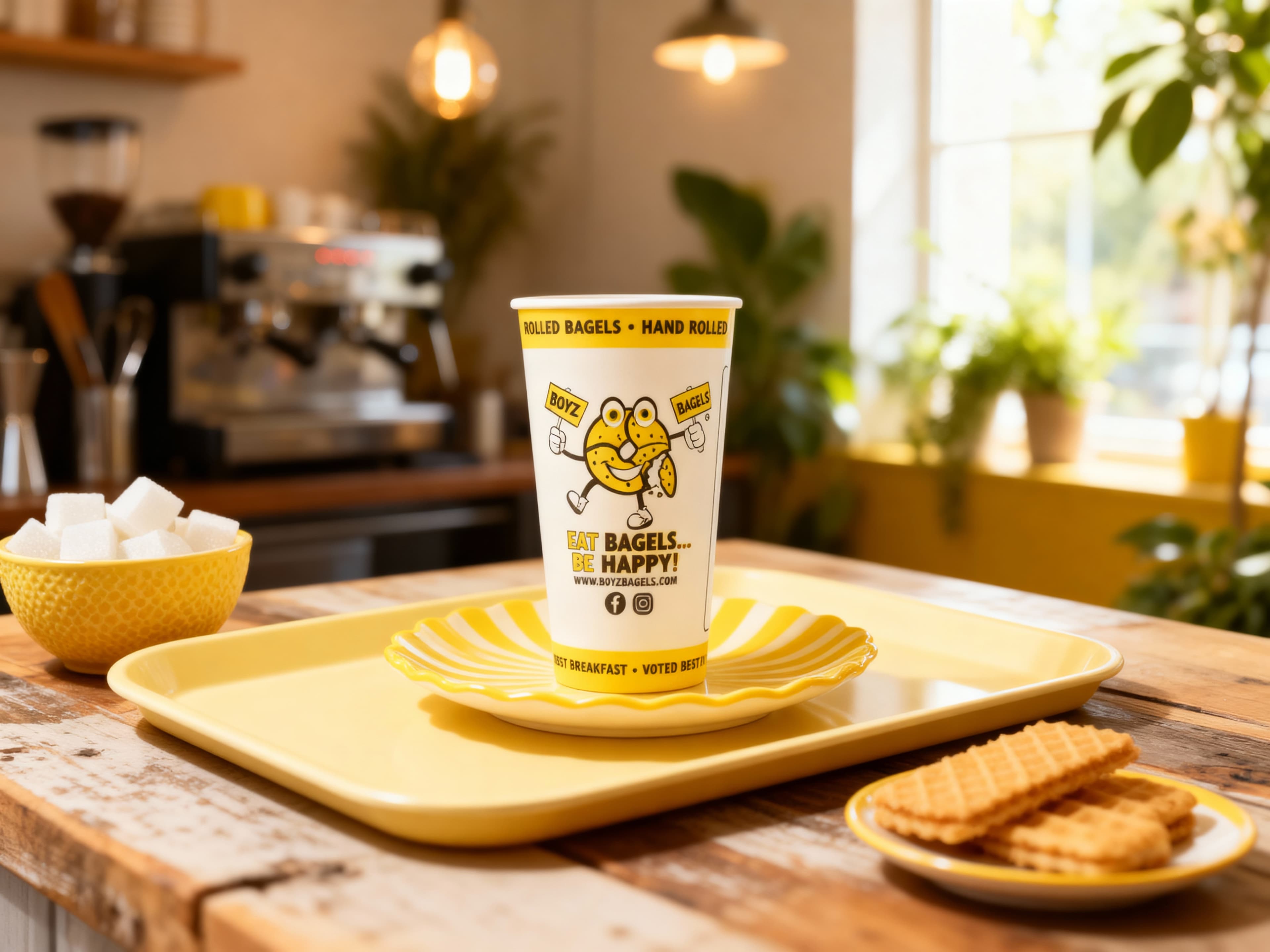
It is best not to. Disposable paper hot cups are made for hot drinks poured in, not for heating in a microwave. Most have a thin polyethylene (PE) plastic lining that makes them liquid-tight and a glued seam down the side. Manufacturers generally do not label these cups as microwave safe, and heating liquid in them can soften the seam or the lining and lead to leaks or spills of very hot liquid.
Coffee gone cold? Pour it into a microwave-safe mug, heat it there and pour it back if you want. Also watch for superheating: water heated in a smooth container can boil suddenly when disturbed, so heat in short intervals and stir.
- Paper cold cups are lined for cold drinks and condensation. Do not microwave them.
- Clear plastic cold cups, such as PET cups, are made for cold drinks only and are not meant for heat.
- Lids on any takeout cup should come off before heating. Most plastic lids are not designed for the microwave.
For more on how different cups are built, see our guide to types of cups.
Paper bowls, paper towels and other containers
Paper bowls
Paper soup and noodle bowls usually have a liner so they hold liquid. Treat them like coated plates: microwave only if the bowl is labeled microwave safe, and remove any plastic or metal-lined lid first.
Paper towels
A plain white paper towel laid over a plate is a common way to keep splatter in and moisture around the food. Keep times short, and avoid printed or recycled towels unless the package says they are microwave safe. Do not leave a paper towel heating with nothing underneath.
Foam plates and cups
Polystyrene foam containers should only go in the microwave if they are labeled microwave safe. The FDA advises using only containers labeled for microwave use, so that label is the thing to look for. Without it, move the food to a glass or ceramic dish.
Takeout containers
Many takeout containers are not labeled for microwave use. Remove plastic lids and any foil or metal parts, check the container for a microwave-safe mark and transfer the food if you are unsure. Our guide to reheating pizza covers better ways to warm up leftovers than the box they came in.
Food safety when reheating
Whatever plate you use, the bigger safety question is the food. USDA guidance is to reheat leftovers to 165 °F. Microwaves heat unevenly, so cover the food, stir or rotate it partway through and let it stand for a minute before checking the temperature in a few spots with a food thermometer. If leftovers have been sitting at room temperature for more than two hours, it is safer to throw them out than to reheat them. Our post on how long pizza lasts in the fridge covers storage times.
Paper plates for your food business
If you serve food on paper plates, tell customers what each item is for. Our 9" kraft paper plates are uncoated and made for dry and semi-dry foods such as pizza slices, sandwiches, pastries and snacks. They are not certified as microwave safe, so if a customer wants to warm something up, the advice above applies: check first, keep the food on the plate and heat briefly.
For hot drinks, our custom hot paper cups are built to hold coffee and tea as served, and the takeout containers range covers meals that travel. Everything is made in the USA.